
How the Knicks Orange and Blue Became a New York Symbol
Key Takeaways
- The Knicks’ orange-and-blue colors trace back to Dutch colonial New York (1600s), making them one of the few NBA palettes with genuine historical roots — not a marketing department’s choice.
- Despite winning their last championship in 1973, the Knicks remain one of the NBA’s most globally recognized franchises, driven by Madison Square Garden’s cultural gravity and New York’s outsized identity.
- Wearing Knicks gear has always meant something beyond fandom — it’s a declaration of belonging to a city, not just a team.
Every time I’m on the subway heading uptown, or grabbing a slice on Seventh Avenue, or pushing through the crowd at Penn Station — I notice the jerseys. Orange and blue. The Knicks wordmark across someone’s chest. And without a word exchanged, something clicks between strangers. A nod. A quick let’s go Knicks. Two people who’ve never met, who probably have nothing else in common, sharing something that needs no explanation.
I’ve lived in this city my whole life. I’ve watched a lot of teams come and go in terms of cultural relevance. The Knicks never do.
That’s not sports loyalty, though it starts there. It’s something older. Something that runs deeper than win-loss records or front office decisions or James Dolan. Understanding why that orange-and-blue jersey carries the weight it does requires going back — not just to the last bad season, but to the Dutch.
The History of Knicks Colors: Where Did the Orange and Blue Actually Come From?
The Knicks were founded in 1946 as one of the original BAA — Basketball Association of America — franchises, a year before the league became the NBA. When the team’s founders chose the colors, they weren’t picking from a mood board. The blue came from New York City’s official municipal flag. The orange traced back to the House of Orange-Nassau, the Dutch royal family whose settlers founded New Amsterdam in the 1620s — the colony that eventually became New York.
So when you look at that jersey, you’re not looking at polyester and a marketing decision. You’re looking at nearly four centuries of civic identity compressed into a uniform. I genuinely didn’t understand this until I was an adult, and when I learned it, the way I saw the colors changed completely. Most franchise colors are arbitrary — someone’s preference, a compromise, a focus group. The Knicks’ palette connects to something that existed long before basketball did.
Over the decades, the uniforms evolved — pinstripes came and went, there was that short-lived late-’90s rebrand that some people loved and others tolerated — but the core never budged. Orange and blue. A Knicks jersey from 1970 and one from 2025 are telling the same chromatic story. That kind of durability isn’t accidental. According to NBA’s franchise history records, the Knicks have consistently ranked among the league’s most recognized teams globally — not primarily because of wins, but because of what New York means as a city and what the team means within it.
Madison Square Garden: The World’s Most Famous Arena (and Why That Matters)
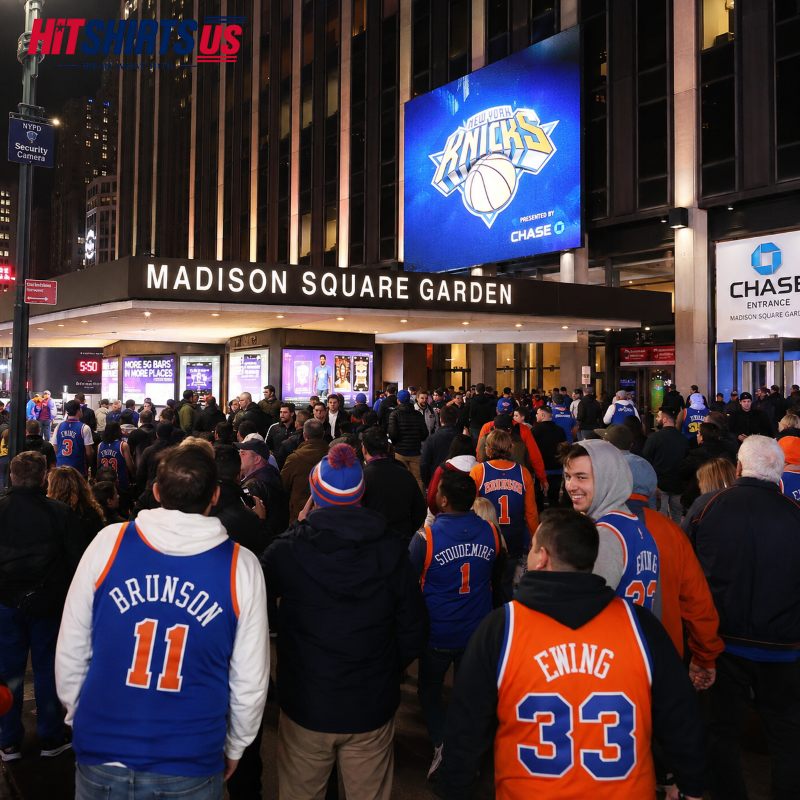
I need to talk about the building, because you cannot separate the jersey from the place.
Madison Square Garden sits at 4 Pennsylvania Plaza in Midtown Manhattan, and calling it a basketball arena is technically accurate the way calling the Sistine Chapel a room with a painted ceiling is technically accurate. MSG has hosted heavyweight title fights. Rolling Stones concerts. Billy Joel selling out 150 shows over multiple decades. Political rallies. Countless playoff nights that became permanent fixtures in the memory of this city.
The thing that gets you when you’re inside for a game — especially a big one — is the compression. About 19,500 seats, and the building is old enough that the crowd is genuinely close to the action. When something happens, the sound doesn’t dissipate the way it does in modern arenas built for sightlines and luxury boxes. It bounces and builds. I’ve been in newer, fancier buildings around the league. None of them feel like that.
When Jalen Brunson hits a pull-up jumper in the fourth quarter to put the Knicks up two with two minutes left, the Garden erupts in a way that you feel in your chest. That’s not me being sentimental. Ask anyone who’s been there for a moment like that. The building is a participant, not just a venue.
This matters for the jersey question because when you put on Knicks orange and blue, you’re not just representing a franchise. You’re wearing the colors of that building, that crowd, that sound, that specific electricity that doesn’t exist anywhere else in the league.
The Paradox: 50 Years Without a Championship, and the Fans Never Left
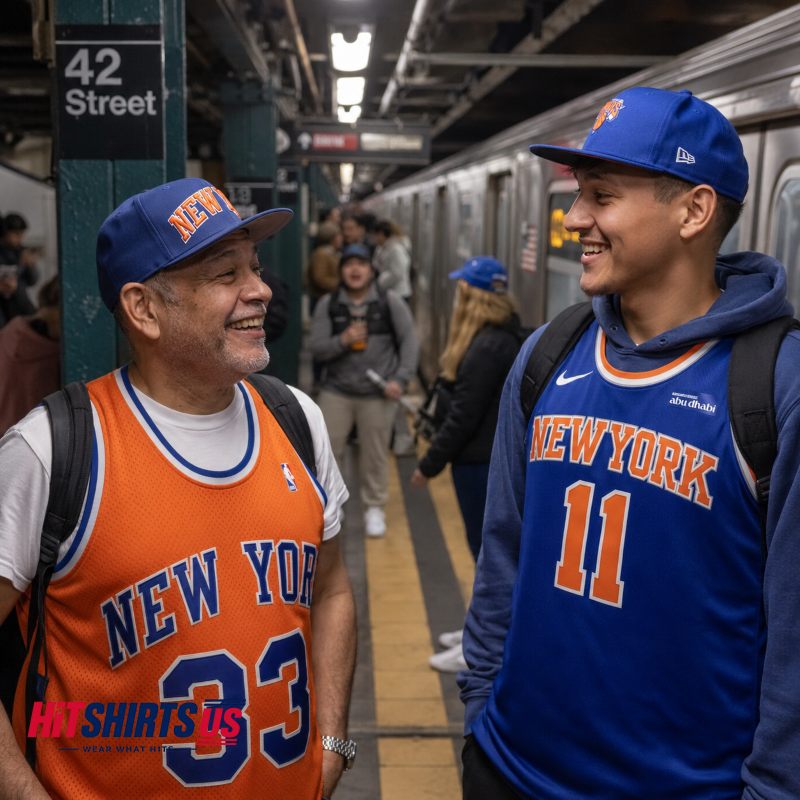
Here is the part that genuinely confuses people who don’t follow the Knicks.
The team’s two championships came in 1970 and 1973, built around Willis Reed, Walt Frazier, Dave DeBusschere, and coach Red Holzman. Since then — nothing. More than fifty years of teams ranging from very good to historically frustrating. Playoff runs that ended badly. Draft picks that didn’t pan out. Coaches who didn’t last. Front office decisions that made national sports media shake their heads.
Most franchises that go that long without a title either fade or become the league’s cautionary tale. The Knicks did neither.
I think the reason is that Knicks fandom stopped being primarily about championships somewhere around the mid-1980s. It became about something else — a certain kind of defiant loyalty that New Yorkers recognize in themselves. You don’t root for the Knicks because it’s comfortable. You don’t root for them because the odds favor you. You root for them because this is your team, and your team is your team the way your neighborhood is your neighborhood, regardless of what the rest of the country thinks about it.
I’ve had this feeling articulated back to me by fans in their seventies who watched the ’73 championship in person, and by people in their twenties who started watching the team when they were already in a rebuild. Same feeling, different decades. The orange-and-blue jersey carries that inheritance — not triumph, but tenacity. Not dominance, but an identity that doesn’t require outside validation.
The Characters Who Built the Mythology
Every enduring cultural symbol needs figures who embody it, and the Knicks have had the right people at the right times.
Walt “Clyde” Frazier is the one I keep coming back to. On the court, he was arguably the greatest defensive point guard of his era — disciplined, instinctive, never rattled. Off it, he was a whole other thing: fur coats, wide-brimmed hats, a Rolls-Royce, a sense of personal style that was decades ahead of when NBA players were expected to have one. He invented a version of New York cool that the city had never quite seen in a basketball player. Then, after retirement, he became the team’s broadcaster and brought with him a running vocabulary of invented compound adjectives — “dishing and swishing,” “herky-jerky,” “scintillating and titillating” — that have become, for longtime fans, a private language. If you know Clyde’s phrases, you know something real about the culture.
Patrick Ewing spent 15 seasons at the Garden as the franchise cornerstone of the ’80s and ’90s, never capturing the ring, always close enough that it hurt. His number 33 hangs from the rafters because of what he gave to the building, not because of a championship. When he came back as a coaching staff member and later when his son Patrick Jr. played at the Garden, the reception told you everything you needed to know about the relationship between certain players and this city.
The Pat Riley era in the early ’90s brought a physical, grinding style that reflected New York’s own self-image. The annual wars with Jordan’s Bulls — I watched those series in my living room convinced every year that this was the year — are the stuff of actual basketball mythology. The Knicks usually lost. But they made Jordan and Pippen earn every series, and New York respects nothing more than making the powerful earn it.
The 1999 Finals run, with an 8th-seeded Knicks team that had no business being there, reaching the championship series before losing to the Spurs — that was perhaps the most New York thing the franchise has ever done. Scrappy, improbable, ultimately unsuccessful, completely unforgettable.
Spike Lee and the Cultural Gravity of Who Shows Up
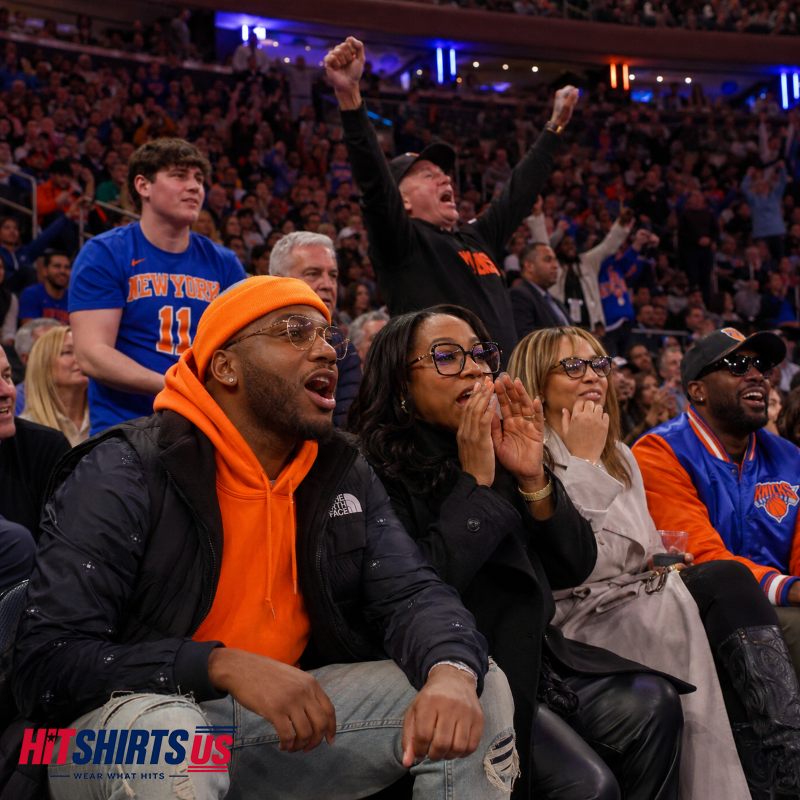
Part of what makes the Knicks different from other franchises is who chooses to be publicly associated with them.
Spike Lee has had courtside seats at the Garden for decades. His presence at games — fully invested, physically animated, occasionally in documented conflict with players and referees — became part of the spectacle itself. Spike Lee in Knicks gear, leaning into a crucial fourth quarter, is as embedded in the Garden’s visual identity as the court floor. He’s not a celebrity fan. He’s a character in the Knicks story.
The broader celebrity gravity of the Garden is real and worth acknowledging. Other teams have famous fans. The Knicks’ celebrity presence has historically come from New York’s creative community specifically — filmmakers, musicians, fashion designers, artists — in a way that reflects the team’s function as a cultural touchstone rather than just a sports property. Wearing orange and blue at the Garden signals something about your relationship to the city, not just to basketball.
The History of Knicks Colors and What the Current Era Means
The past few seasons have brought something I haven’t felt around this team in a long time: genuine, unmanufactured optimism.
Jalen Brunson arrived from Dallas in 2022 and immediately became the kind of player New York needed — skilled, consistent under pressure, constitutionally unfazed by the market. I’ve watched a lot of players arrive at the Garden and visibly feel the weight of the thing. Brunson seems to run on it. The roster around him has been built steadily and intelligently, which hasn’t always been the case.
For fans who endured the Isiah Thomas front office era, the James Dolan ownership frustrations, the lottery seasons, the false starts — this current stretch feels earned in a different way. Not just hopeful. Substantiated. The Basketball Reference franchise records make the recent run stand out pretty clearly against the broader historical pattern.
And the jersey is everywhere again. Manhattan streets, Brooklyn coffee shops, Queens train platforms. The orange-and-blue flag is back up in a way that feels less like nostalgia and more like anticipation.
Why Any of This Matters If You’re Buying One
If you’re looking to gear up for a game at the Garden, or you’re buying something for a die-hard New Yorker who’s been wearing these colors through decades of patience — the Knicks jersey isn’t like most sports merchandise. It doesn’t just represent a team. It carries a city’s identity, a specific texture of loyalty that New Yorkers recognize in each other across subway cars and pizza counters and crowded sidewalks.
For custom Knicks gear and basketball gifts that go beyond the standard retail options — including personalized pieces that make the connection feel more specific and personal — Hit Shirts US has options worth checking out.
The Long Game
The Knicks have been playing the long game since 1946. More than fifty years removed from their last championship, the orange-and-blue jersey remains one of the most recognized, most worn pieces of sports merchandise anywhere in the world.
That doesn’t happen through wins alone. It happens when a team becomes genuinely inseparable from a city’s identity. When the colors trace back to Dutch colonists and municipal flags rather than a design firm. When the mythology accumulates through heartbreak as much as triumph, through Ewing’s near-misses and the 1999 run and all the seasons in between. When the building becomes a landmark and the players become characters in a story the city keeps telling about itself.
The Knicks and New York have been writing that story together for nearly eighty years. I’ve been watching for thirty of them. Some of those years were very painful. A few were something close to transcendent.
Right now, for the first time in a while, it feels like something real might be building. And if you know anything about being a Knicks fan, you know that hope, however measured, is not something we give away lightly.
For complete franchise history stats and season-by-season records, the Basketball Reference Knicks page is the most comprehensive public resource available.
